
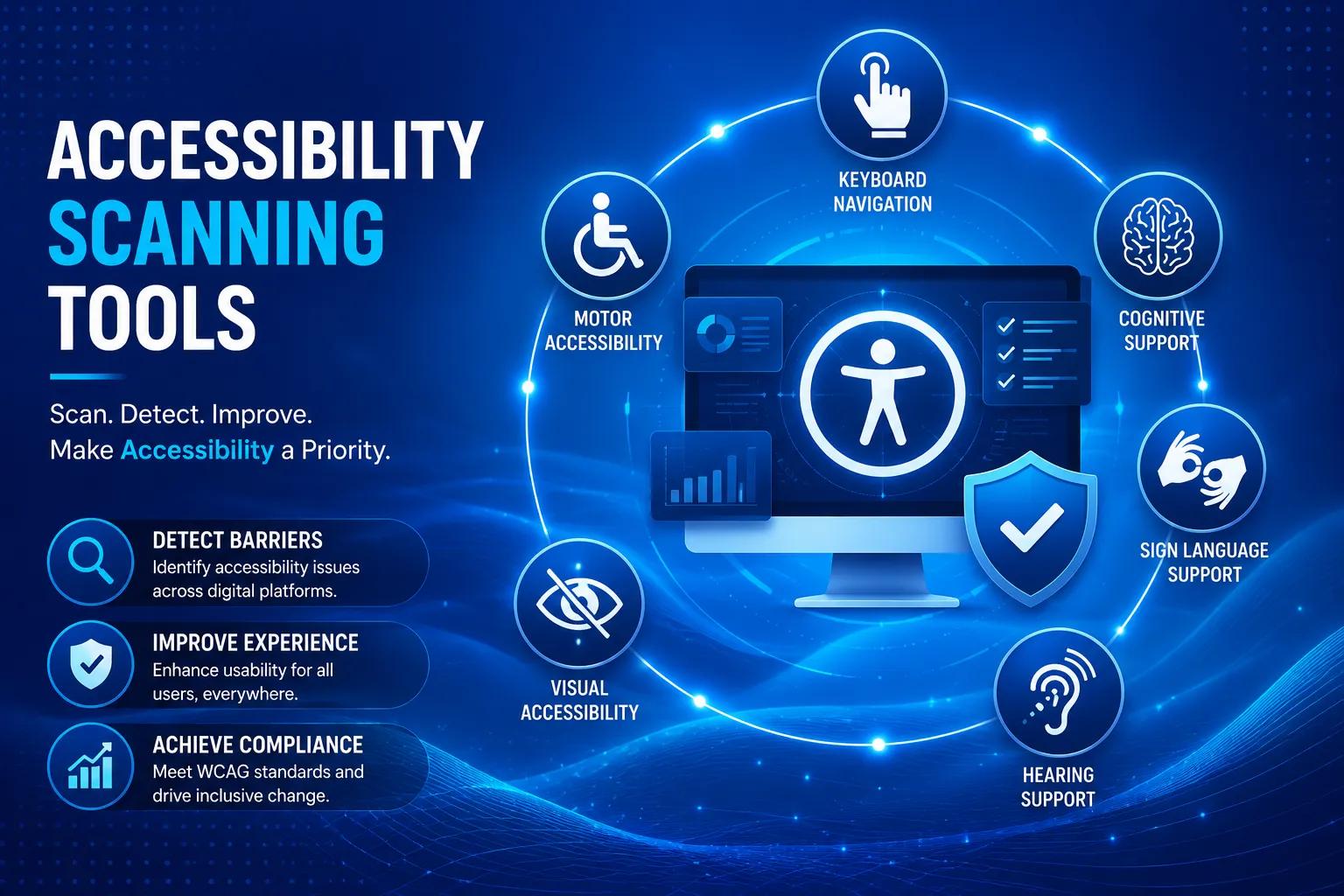
Digital accessibility is no longer optional. With growing legal requirements, expanding user expectations, and search engines rewarding inclusive design, businesses are turning to accessibility scanning tools to identify and fix barriers on their websites before they become costly problems. Whether you run an ecommerce store, a SaaS platform, or a corporate website, choosing the right scanning solution can save you time, reduce legal risk, and improve the overall experience for every visitor, including those using assistive technologies.
Why Accessibility Scanning Matters in 2026
The internet has become more complex, and so have the rules governing it. Regulations like the ADA, WCAG 2.2, and the European Accessibility Act continue to shape how organizations approach digital compliance. A single overlooked issue, such as poor color contrast, missing alt text, or unlabeled form fields, can prevent users with visual, auditory, or motor impairments from completing basic tasks on your site. This is where a reliable web accessibility checker becomes essential, helping teams catch these issues early rather than after a complaint or audit.
What to Look for in an Accessibility Checker Tool
Not all scanning tools are created equal. When evaluating options, businesses should consider a few core factors:
Accuracy of detection across HTML, CSS, and dynamic content Coverage of WCAG success criteria at all conformance levels Ease of integration with existing development workflows Clarity of reporting so non technical teams can understand issues Ability to scan at scale across multiple pages or entire domains
A strong website accessibility checker does more than flag problems. It should also guide teams toward practical fixes, prioritize issues by severity, and support ongoing monitoring rather than a one time scan.
The Shift Toward Continuous Accessibility Monitoring
In earlier years, many organizations treated accessibility as a single audit project completed once and forgotten. That approach no longer works. Websites change constantly through new content, updated designs, and evolving code, which means accessibility barriers can reappear without warning. Modern accessibility scanning tools are built around continuous monitoring, automatically rescanning pages after updates and alerting teams the moment a new issue is detected. This shift has made accessibility management proactive rather than reactive, saving organizations from last minute fixes before audits or compliance deadlines.
Automated Scanning Combined With Human Insight
While automated tools are excellent at catching a large portion of accessibility issues quickly, some barriers require human judgment, particularly around context, meaning, and usability. The most effective approach in 2026 combines automated accessibility checker tools with periodic manual reviews. Automation handles repetitive technical checks such as missing labels or broken ARIA attributes, while manual testing evaluates whether the experience genuinely works for real users relying on screen readers or keyboard navigation.
Why Tranistics Data Technologies Accessibility Checker Tool Stands Out in 2026
Businesses looking for a dependable way to manage compliance are increasingly turning to the Tranistics Data Technologies accessibility-checker-tool. Built to simplify accessibility management, this tool helps teams detect issues across HTML, CSS, and dynamic content, understand their impact, and resolve them with clear, actionable guidance. Rather than treating accessibility as a one time checklist, it supports ongoing scanning so businesses can stay aligned with evolving WCAG standards without added complexity for internal teams.
How to Choose the Right Tool for Your Business
Selecting the right solution depends on your website size, technical stack, and internal resources. Smaller businesses may prioritize simplicity and quick setup, while larger enterprises often need deeper reporting, role based access, and integration with development pipelines. Cost is another factor, though the value of preventing legal exposure and improving customer experience typically outweighs the investment. Businesses should also consider how frequently a tool updates its detection rules to stay aligned with evolving WCAG guidelines and browser behavior.
The Business Case for Accessibility
Beyond compliance, accessibility directly impacts business outcomes. Search engines increasingly favor well structured, accessible websites, and inclusive design often improves usability for all visitors, not just those with disabilities. Faster load times, cleaner code, and better navigation are common side effects of fixing accessibility issues, which in turn support stronger SEO performance and lower bounce rates.
Take the Next Step Toward a Fully Accessible Website
Choosing the right accessibility scanning tool is one of the most important decisions your business can make in 2026. It protects your organization from compliance risk while creating a more welcoming digital experience for every user who visits your site.
At Tranistics Data Technologies Private Limited, we understand how critical accessibility has become for modern businesses. Our Tranistics Data Technologies accessibility-checker-tool is designed to help organizations identify, understand, and resolve accessibility issues quickly and accurately. If you are ready to make your website more inclusive, compliant, and future ready, reach out to Tranistics Data Technologies Private Limited today and take the first step toward a fully accessible digital presence.