

How Expert Accessibility Remediation Reduces Legal Risks for Businesses
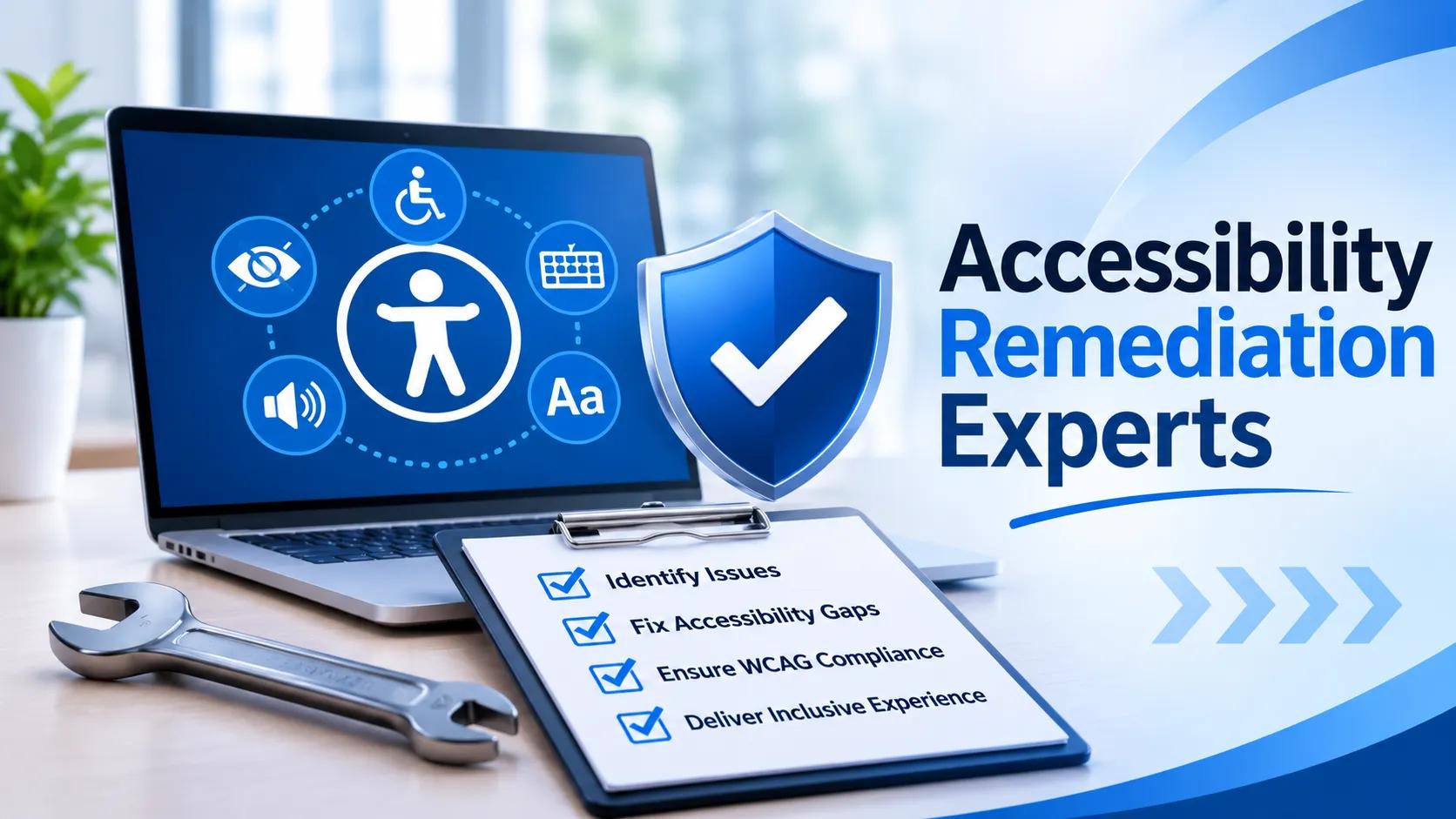
Businesses that work with accessibility remediation experts reduce legal risk because specialists find barriers that automated scans miss, fix them at the code and design level, and keep clear records of every change. Expert remediation turns accessibility from an unpredictable legal exposure into a managed process that can be proven when questions arise.
Many companies only think about accessibility after receiving a demand letter or complaint. By then, the cost of reacting is far higher than the cost of preparing. A planned approach protects your brand, your customers, and your budget.
Why Is Website Accessibility a Legal Risk for Businesses?
Laws and regulations in many regions expect digital content to be usable by people with visual, hearing, motor, and cognitive disabilities. Courts and regulators commonly use WCAG as the reference point for what counts as accessible. If a customer cannot complete a purchase, fill out a form, or read your content with assistive technology, your business may face complaints, settlement demands, or reputational damage.
The risk is not limited to large enterprises. Small online stores, healthcare providers, schools, and service companies are regularly targeted because inaccessible checkout flows and unlabeled forms are easy to document.
What Do Accessibility Remediation Experts Actually Do?
Experts combine automated scanning with manual testing. They review your site with keyboard navigation, screen readers, and zoom tools, then trace each failure back to its cause in the template, component, or content. Good accessibility remediation services do more than list problems. They repair them, retest them, and explain how to prevent them from returning.
Website accessibility remediation typically covers semantic structure, form labels, color contrast, focus order, alternative text, error messaging, and dynamic components such as menus and modals. These are the areas where legal complaints most often begin.
How Does Expert Remediation Compare With DIY Fixes?
Area | DIY or Plugin Approach | Expert Remediation |
Issue detection | Relies mostly on automated scans | Blends automated and manual testing |
Depth of fixes | Surface patches that may break later | Root cause fixes in code and design |
Assistive technology testing | Rarely performed | Performed with real screen readers and keyboards |
Documentation | Minimal or missing | Detailed audit trail and remediation logs |
Legal defensibility | Weak, difficult to prove effort | Strong, shows sustained good faith action |
Long term upkeep | Reactive | Planned monitoring and guidance |
What Does This Look Like in a Real Business?
Consider an anonymized online retailer that received a complaint because a customer using a screen reader could not complete checkout. The retailer had installed an overlay widget and believed the problem was solved. An expert review found that payment fields had no programmatic labels, error messages were never announced, and a promotional pop up trapped keyboard focus.
The remediation team repaired the form markup, rebuilt the pop up behavior, and tested the full purchase journey with assistive technology. They also produced a report showing what was found, what was fixed, and when. When the retailer responded to the complainant, that report demonstrated a serious and verifiable commitment to accessibility, which helped move the matter toward resolution instead of escalation.
Why Does Documentation Matter in Legal Disputes?
Courts and opposing counsel look for evidence of intent and progress. A business that can show dated audits, prioritized fix lists, retesting results, and an accessibility statement is in a much stronger position than one that only claims to care. Expert providers create this paper trail as part of the engagement, so your team does not have to assemble it under pressure.
How Can an Accessibility Checker Tool Support Ongoing Compliance?
Remediation is not a one time event. Every new page, campaign, or feature can introduce fresh barriers. The Tranistics Data Technologies accessibility checker tool helps teams spot common issues early, so developers and content editors can correct them before they become complaints. Paired with expert manual review, it keeps your site aligned with WCAG as it grows and changes.
What Should You Look for in an Accessibility Remediation Company?
Choose a partner that tests with real assistive technology, fixes issues at the source, and provides clear reporting. Ask whether they train your developers, support your content team, and offer monitoring after launch. Avoid providers who promise instant compliance through a single script, because lasting accessibility comes from correcting the underlying code and design.
Protect Your Business Before a Complaint Arrives
Waiting for a legal notice is the most expensive way to learn about accessibility gaps. Start with an expert audit, fix the barriers that affect customers most, and keep monitoring as your digital presence evolves. Every improvement widens your audience and strengthens your legal position at the same time.
Tranistics Data Technologies Private Limited helps businesses reduce legal exposure through thorough audits, hands on remediation, and ongoing support from experienced specialists. Contact our team today to book your accessibility consultation, try our accessibility checker tool, and make your website safer, more inclusive, and ready for any scrutiny.